Hedge Cutting & Trimming
A regular tidy, a big height reduction, or a hedge that has quietly turned into a row of trees. Every clipping taken away afterwards. Working across Warrington and the towns around it.
Get a Free QuoteHow often does your hedge need cutting?
Formal hedges such as privet, box and hornbeam look sharpest with two cuts a year, in late spring and late summer. Beech and yew usually only need one, towards the end of summer.
Native and flowering hedges work differently. Hawthorn, blackthorn and mixed hedges are best left until winter, when the berries have gone and the leaves are down. Not sure what yours is? We can tell you when we visit.
Birds come first from March to August
A thick hedge is prime nesting habitat. Under the Wildlife and Countryside Act 1981 it is an offence to damage or destroy an active wild bird's nest. The main nesting season runs roughly from 1 March to 31 August.
You can still cut a hedge in that period, but someone has to check it properly first. We do that before starting. If there is a nest in use, that stretch waits until the birds have fledged. The law applies to you as well as to your contractor, so be wary of anyone happy to start in May without looking.
Leylandii and other conifers
Here is the rule that matters most: most conifers will not regrow from brown wood. Cut past the green into the bare inner wood and that patch stays bare. Yew is the well known exception.
So conifer hedges want frequent light trims, staying within the green. If yours has been left too long, we will tell you what can realistically be done. Sometimes that is a careful reduction and accepting the shape, and sometimes it is replacing it with something more forgiving.
Bringing back an overgrown hedge
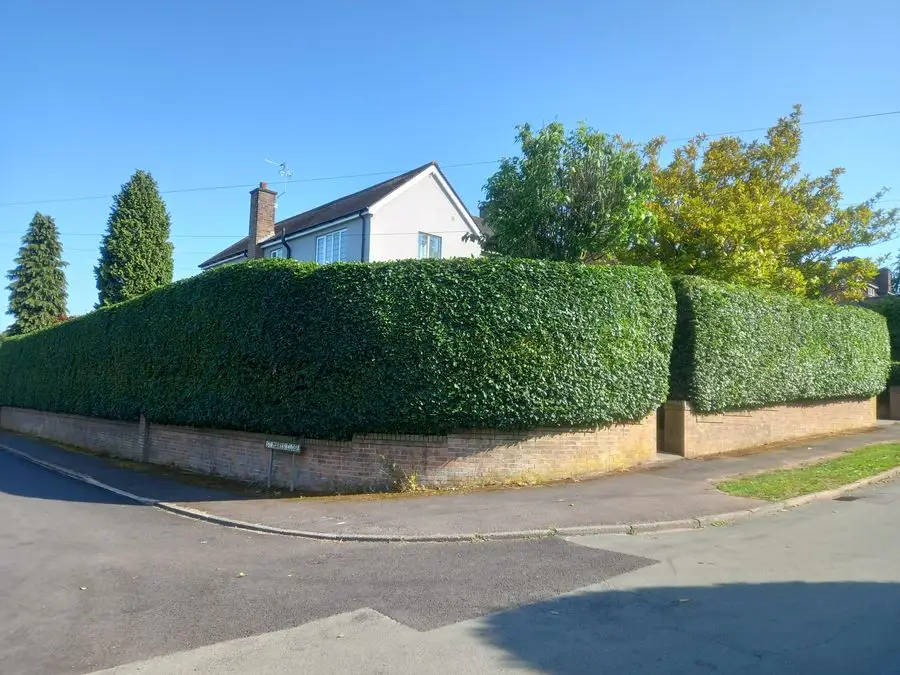
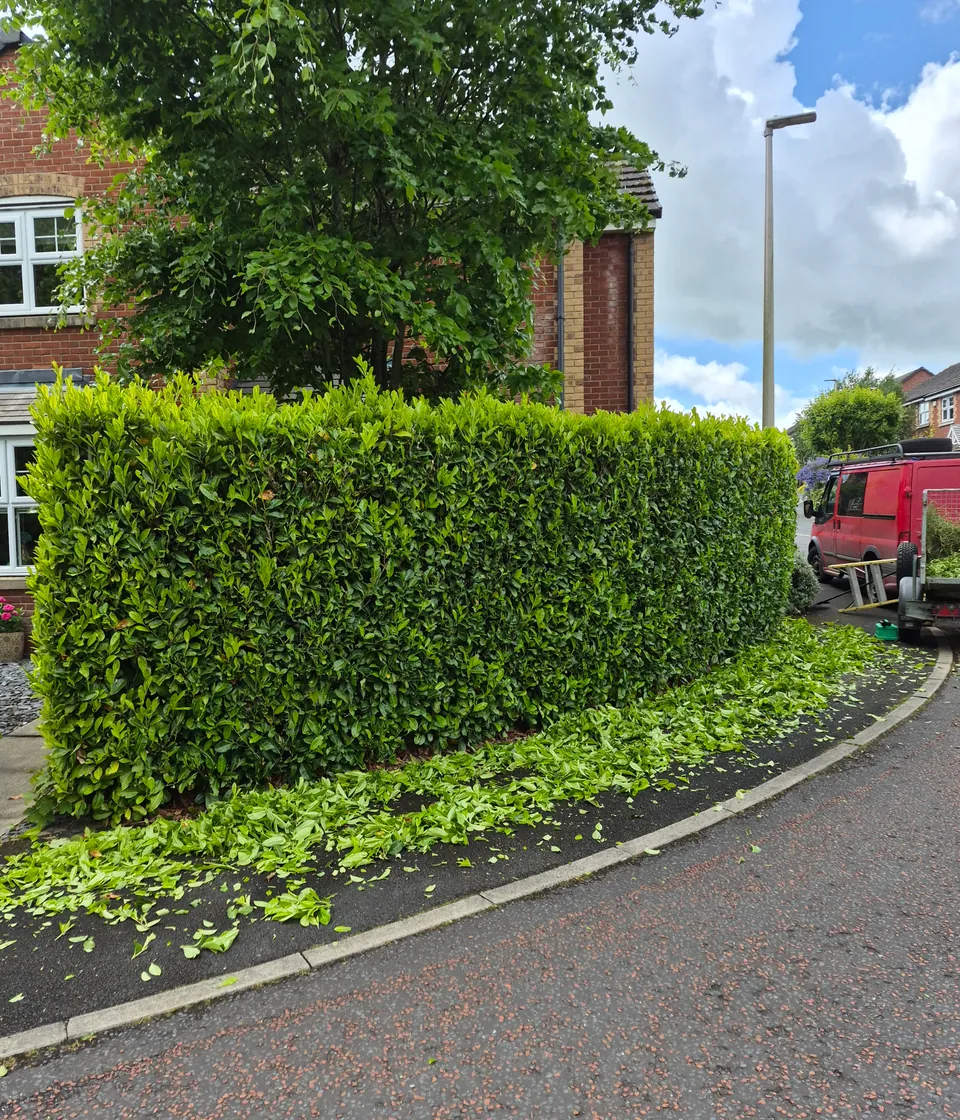
Broadleaved hedges and laurel are much more forgiving, and will usually shoot again from old wood after a hard cut. It is best done in stages. We take the top and one side back in the first winter, let the new growth come through, then do the other side the next winter.
What your quote covers
- A free visit and a written price
- Public liability insurance
- A nest check during nesting season
- Formal hedges cut square and level
- Height reductions and reshaping
- Overgrown hedges restored in stages
- Ladder, platform or climbed access
- All clippings chipped and removed
- Regular visits once or twice a year
Neighbours and high hedges
You can usually trim growth that crosses onto your side, back to the boundary line and no further. The cuttings still belong to your neighbour, so a quick chat first saves bad feeling. If both of you want it done, cutting both sides in one visit can work out cheaper.
If talking has failed, the high hedge rules in Part 8 of the Anti-social Behaviour Act 2003 may apply. They cover a line of two or more mainly evergreen trees or shrubs over two metres high that blocks light. You have to show you tried to settle it first, and councils normally charge a fee to look at a complaint. Warrington's high hedges page explains how it works there.
Regular visits, and no mess
Many customers prefer not to think about it, so we can book you in at the same time each year, or twice a year for bigger gardens and commercial sites.
Sheets go down before we start. Afterwards the borders and drive are raked and blown clear, and everything goes through the chipper and away with us.
Ring 07943 961691 or fill in the form below. The quote is free and there is no pressure to go ahead.
Ready when you are
Get a free, no-obligation quote. Most enquiries get an answer within 24 hours.
Prefer to talk it through? Give us a call:
📞 07943 961691Thanks, that's on its way!
We'll be in touch within 24 hours, and may ask you to text a photo or two of the job. If you would rather talk, call 07943 961691.